
Capacitor bank inrush: back-to-back switching
Current at capacitor energization must be evaluated separately from continuous operating current. Other energized banks on the same bus change the switching conditions.
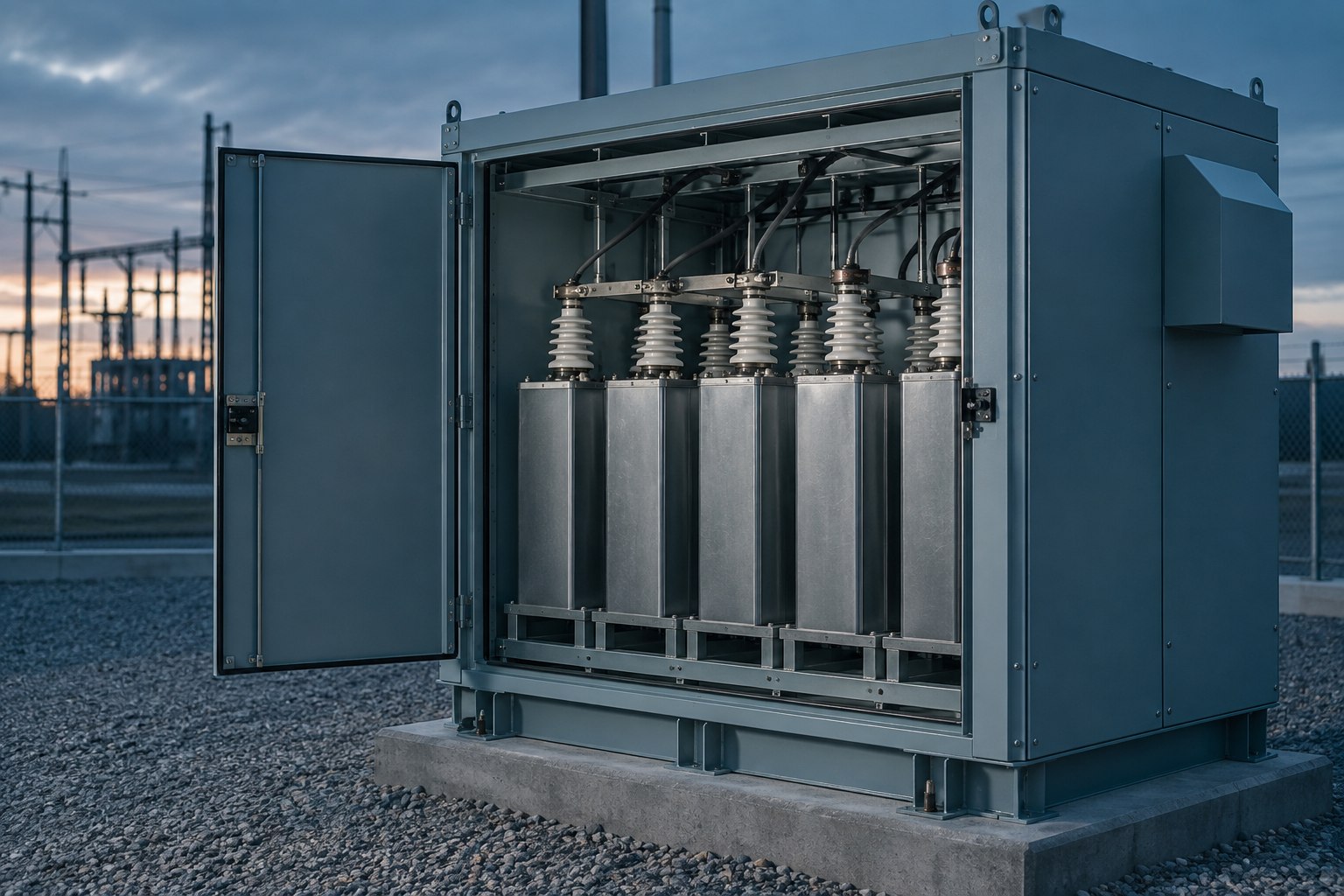
Isolated versus back-to-back
Source inductance matters for an isolated bank. With another energized bank nearby, the low-impedance path between banks can produce larger, higher-frequency transient currents. NEPSI treats this distinction as an important switching-device selection input.
Key inputs
Voltage at closing, capacitance, connection inductance, remaining charge and damping all matter. Comparing only the bank’s nominal current is insufficient.
The inrush reactor’s role
NEPSI’s transient inrush reactors limit the magnitude and frequency of back-to-back current in multi-stage medium-voltage banks. Their purpose differs from harmonic tuning and shunt reactors. Selection must be coordinated with the switching device’s transient-current capability.
Do not rely on a generic discharge interval. Follow manufacturer interlocks, voltage verification and working procedures.
NEPSI — Peak Inrush Current From Capacitor Bank Switching ↗
NEPSI — Transient Inrush Reactors ↗
This content provides general information. Electrical installation work requires assessment by qualified technical personnel.
Explore this topic for your installation.
Share your existing system and technical question to discuss consulting.
Request a technical assessment ↗