
Capacitor bank unbalance and fuse failure
A capacitor fuse opening can affect more than total kvar. Depending on the bank connection, voltage sharing across remaining units and phase balance may change.
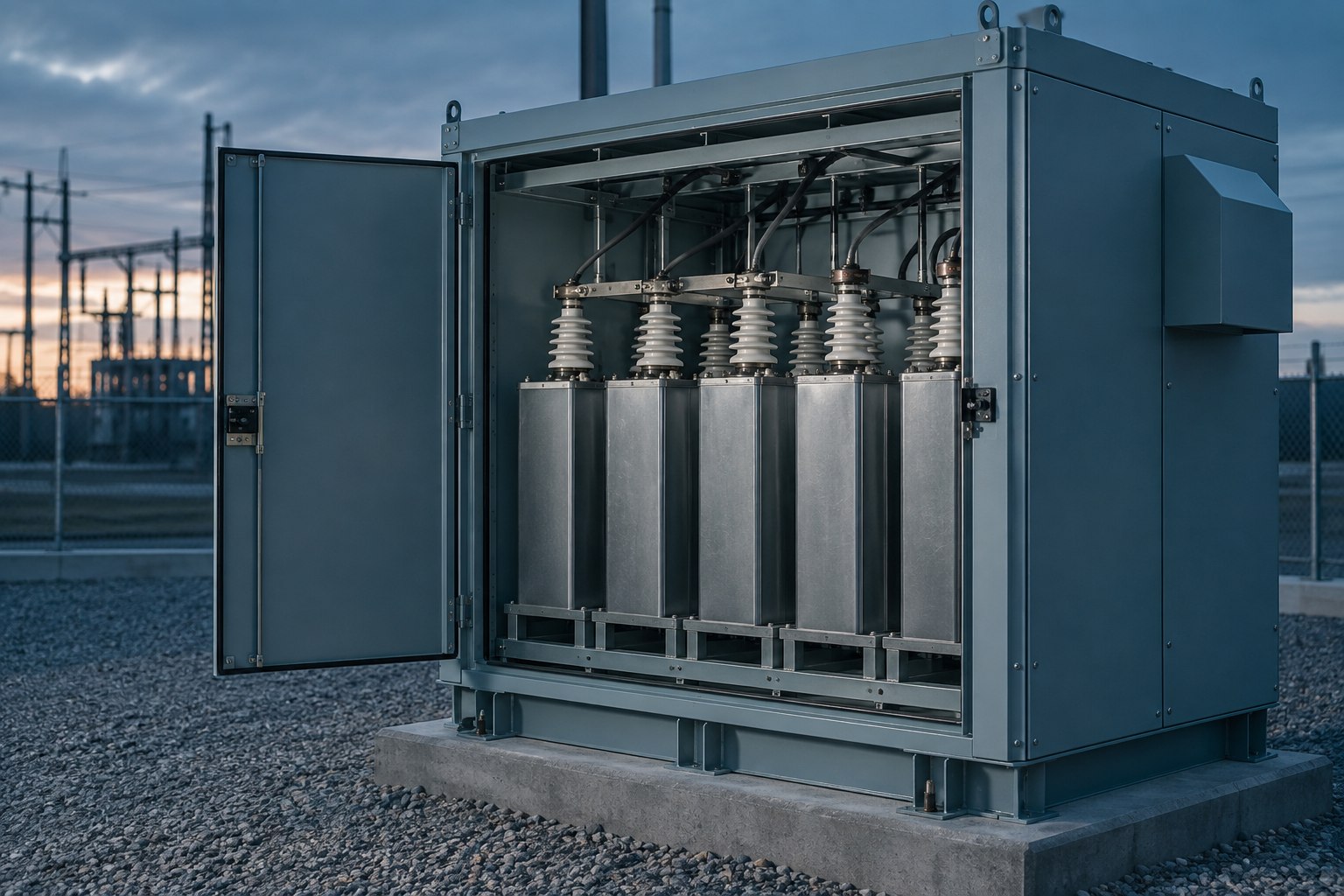
What does neutral voltage show?
In an ungrounded-wye bank, a change in branch capacitive impedance can shift neutral voltage. This can provide an alarm or trip input. NEPSI discusses voltage stress on remaining capacitors together with fuse coordination.
Alarm versus trip
An alarm informs operators of an abnormal condition; tripping is a further protective action. Thresholds and delays depend on bank construction and protection coordination. Another installation’s relay settings should not be copied.
Direct fuse detection
NEPSI also describes sensors that monitor individual fuse conditions. This offers direct failure information as an alternative to inference from neutral voltage. Suitability depends on the bank arrangement and protection philosophy.
This article explains protection concepts, not commissioning settings or test instructions.
NEPSI — Neutral Voltage Unbalance Protection System ↗
NEPSI — An Alternative to Neutral Unbalance Protection ↗
This content provides general information. Electrical installation work requires assessment by qualified technical personnel.
Explore this topic for your installation.
Share your existing system and technical question to discuss consulting.
Request a technical assessment ↗